I would say there was a point I got fatigued on sour beer, at least for a while. I was visiting Crane Brewing Company in Kansas City, before a Royals game. I was a huge fan of their Berliner Weiss interpretations, particularly their Apricot Weiss. However, with all the acidity from the beer getting to me, I left the game in the bottom of the ninth with the Royals down two runs, with one out to go, only for them to come back and win. I watched the fireworks from I-70, and the highlights back at the hotel.
And on top of that, I was already becoming more interested in classic lagers. A passion ignited by breweries such as Kansas City Bier Company, Prost Brewing Company, and my personal favorite of these, Bierstadt Lagerhaus. Any time I brew a Bavarian style beer, the first thing I ask myself is: "What Would Bierstadt Lagerhaus Do?" The answer usually involves a lot of base malt, a decoction mash, and W34/70 yeast.
It seems like the long aged beers with microbiological complexity had sort of fallen by the wayside. It was a common sight at one time to see Brettanomyces variants of beers aging in barrels at a number of breweries that didn't specialize in sours - at the very least it's evident that I had a proclivity for capturing this phenomenon photographically at the time:
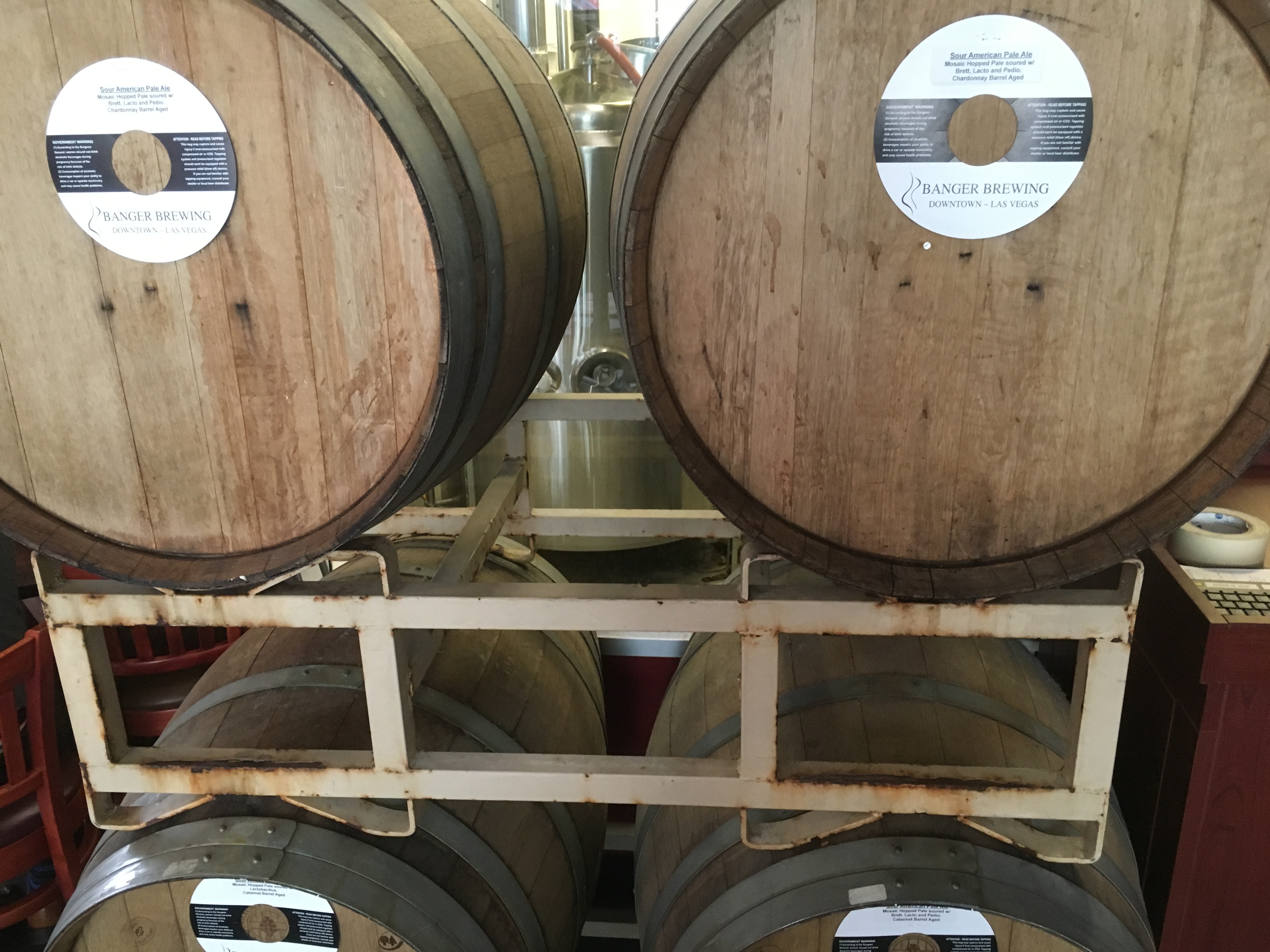
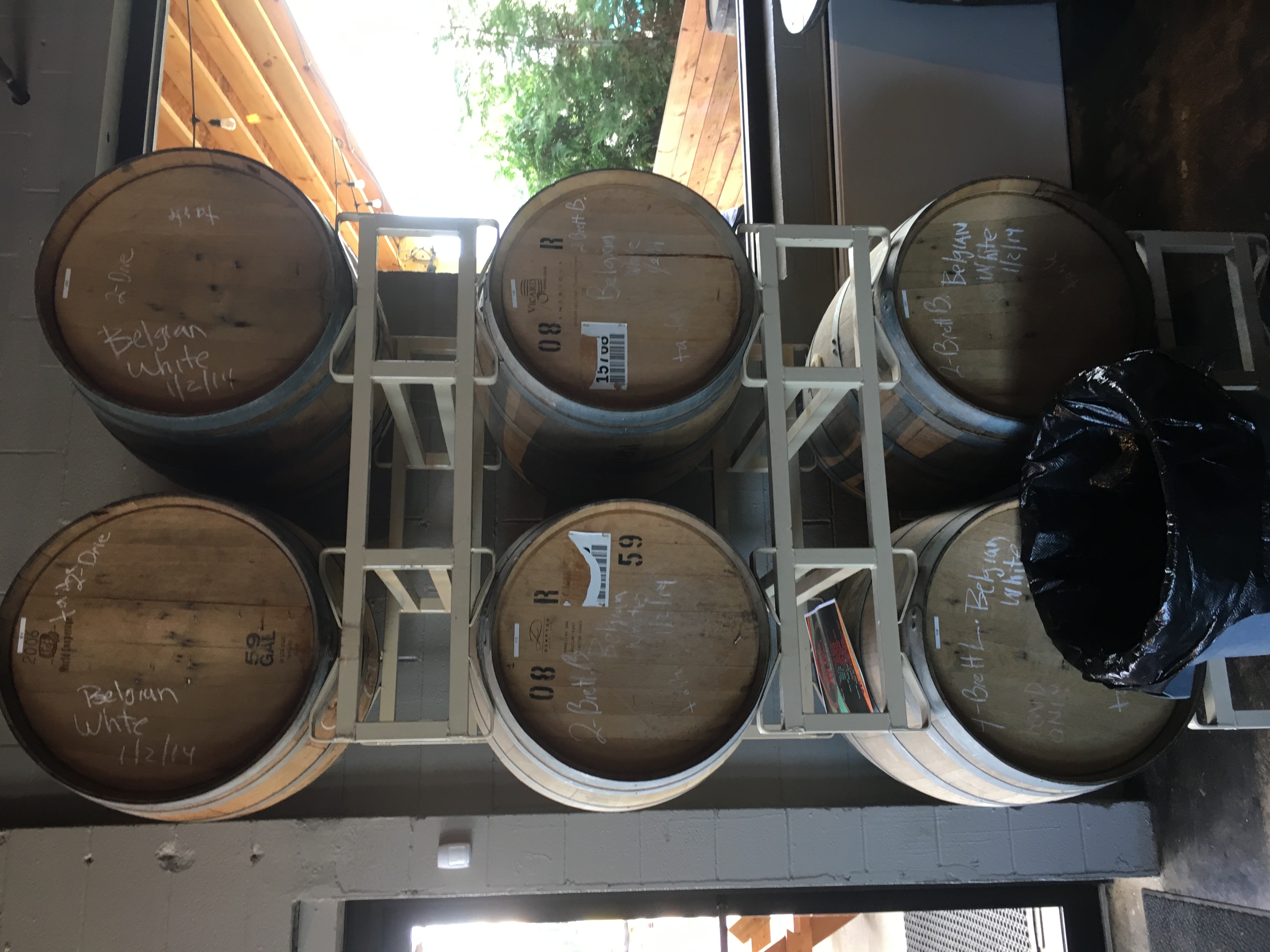
As the interest waned enough to change the market focus, what was left often was a fruity concoction, using lactose like a milk stout. I have nothing against beers like that, but they're not typically my thing. Give me an effervescent, earthy, subtly fruity old school Berliner Weisse any day of the week. Preferably one that isn't kettle soured.
So what happened? They were new to many of us, so there was a boom in interest, but ultimately they are time consuming and expensive to produce, especially if the microbes can infect your equipment and other beers.They may have been more of a novelty, and not something that is going to have widespread appeal as an every day drinker in todays market.
As such, I think one problem with marketing mixed fermentation sours is: it can be difficult to convey in a concise manner what the beer is without getting into the minutiae of how it's made, the microbes involved, etc. I think it also doesn't help that some of your classic Brettanomyces flavor descriptions aren't terribly appetizing sounding. Then, if you go into the details, inevitably some folks will lose interest or they may feel like they're being talked down to as the connoisseurs attempt to convince them that a drink with "funky," "horse blanket," and "vinegar" notes is actually appealing.
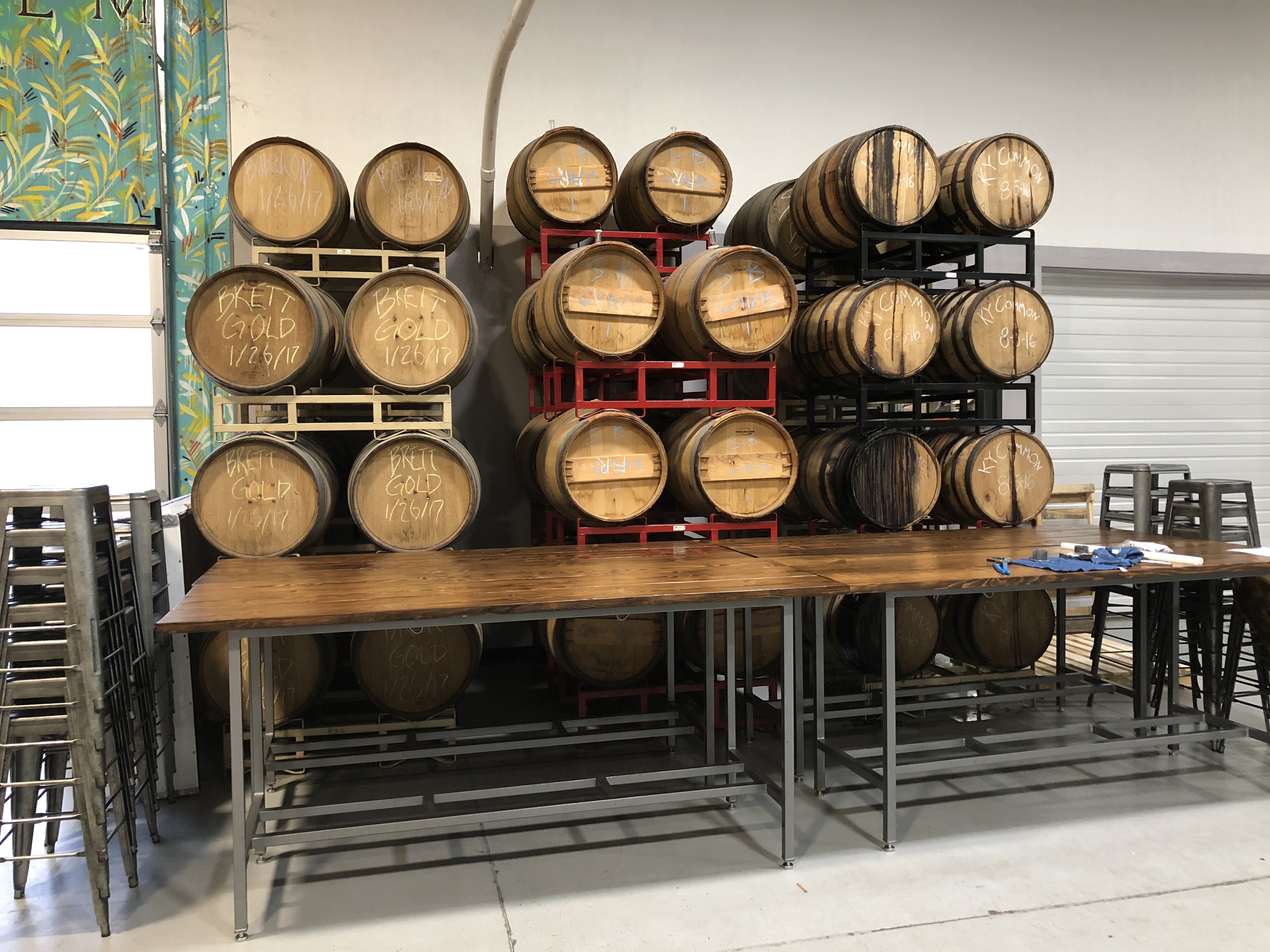
They used to make sour beer like Lambic, Flanders Red, or Brett stock ales, like barley wine or old school IPA, because every beer was infected to some degree. It was unavoidable, so they were born out of necessity. These styles were born of the concerted effort to produce something that aged gracefully. Some present-use beers like Belgian Wit would only last a few weeks at best.
Ironically, as we began to understand the microbiological processes around the turn of the 20th century, the taste for the funky, fruity, Brettanomyces stock ales waned. Breweries could make completely clean beers thanks to isolated yeast strains, under optimal conditions, thanks to artificial refrigeration. Berliner Weisse producers could do what we call "kettle souring", first suggested in 1906, but was not widely accepted at first because it was seen not to produce as complex of a character [Source: Shut Up About Barclay Perkins]. But by the mid 20th century, you have Kindl, blending one wort kettle-soured with lactobacillus, with a wort fermented normally. [Source: Pattinson, Ron. Weisse! pp. 44-46]
The availability of sugar and widespread introduction of soft drinks made a huge impact on the tastes of the beer drinking public. The once acetic Flanders Reds had to adapt to the changing tastes of the Coca Cola age: Rodenbach made its product sweeter in the 1950s. I remember my first impression when I had a Rodenbach in the 2010's appropriately was: why is it so sweet compared to every other Flanders Red I've had?
And so that gets to the crux of the matter: kettle sours are more consistent, easier to produce, cheaper, and are going to sell better, especially with the addition of fruits.
An Ode to Goed Zuur
So given all that, why would anyone deliberately try to make a lambic-like wild ale, a Flanders Reds, or an old school Berliner Weisse?
For me, it's the chance to explore something different, to experience something people in the past would have that we usually cannot today. That is the spirit of homebrewing, and the spirit of this blog.
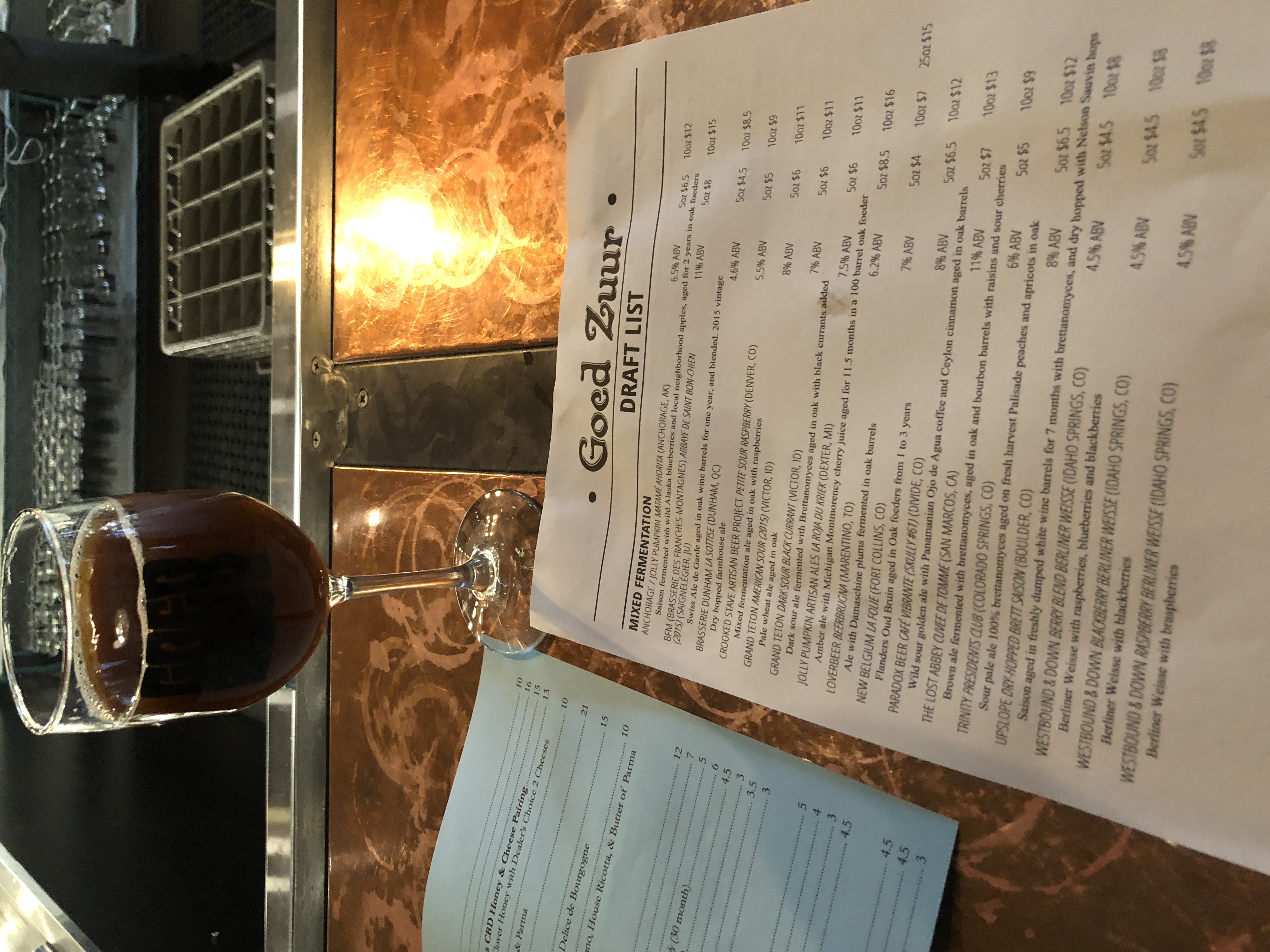
It also used to be the spirit of Goed Zuur: a sour beer bar that used to exist in the Five Points neighborhood in Denver. They had an impressive list of bottled sour beers, sour beers on draft, and charcuterie boards. "Goed Zuur" means "Good Sour" in Flemish, describing the desirable sourness of the beers.

The good news is if you still have mixed fermentation sours in your beer cellar, they can last a really long time. A bottle of Boon Oud Gueuze in my possession says it's best by date is 2036.
Ad astra per aspera, sour beer...